
How to Choose the Right Planter Size for Any Space: A Technical Guide for Architects & Designers
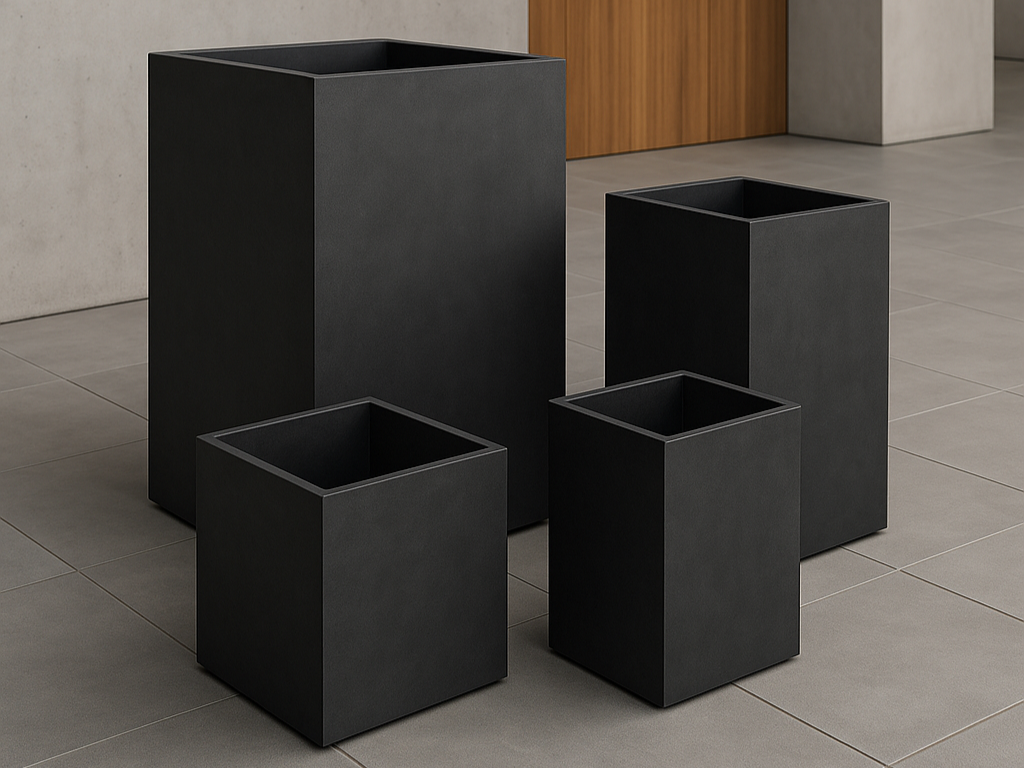
Not Too Big nor Small. Just Right.
Selecting the right planter size is as important as choosing the right material, finish, or placement. The proportion of a planter to its surrounding architecture and to the plant it holds shapes everything from visual balance to spatial flow to long-term plant health. For architects, designers, and landscape professionals, sizing is not simply an aesthetic decision—it is a functional and structural one.
As commercial environments become more design-conscious and increasingly rely on outdoor zones for hospitality, multi-family amenities, and pedestrian comfort, planters have become core architectural elements. Yet determining the correct planter dimensions remains one of the most misunderstood parts of the specification process. This guide outlines the principles, measurements, and design strategies that ensure planters contribute effectively to both the aesthetic and performance of commercial spaces.
1. Understanding Planter Sizing: The Architectural Perspective
Planters act as volumetric forms in space. They define edges, create rhythm, and anchor visual lines. Choosing the right size is essential for maintaining architectural harmony.
1.1 The Rule of Thirds for Proportion
The “rule of thirds” is a classic design principle that applies as well to planter sizing as it does to photography or architecture. In general:
The planter height should be one-third to one-half the height of the plant above the soil line.
For trees, the planter height can sometimes reach half or slightly more of the tree’s trunk height.
This proportion maintains visual balance between the planter as a sculptural form and the greenery it holds.
1.2 Scale in Commercial Environments
Commercial spaces—hotel entrances, lobbies, restaurants, courtyards, and rooftops—can easily dwarf residential-scale planters. Under-scaling is one of the most common design mistakes.
General guidelines:
Lobby areas → planters should be 30–48 inches tall
Hotel or office entrances → 36–60 inches tall for visual presence
Large outdoor plazas → 48–72 inches for proper scale
Rooftops → medium-tall planters (24–42 inches) to anchor space without blocking views
Selecting planters too small creates visual noise rather than structure.
1.3 Architectural Balance and Sightlines
Tall planters are excellent for:
Framing doorways
Creating vertical rhythm
Softening long walls
Guiding circulation paths
Low or mid-height planters work well for:
Seating areas
Edges of patios
Pool surroundings
Pathway transitions
A thoughtful height mix produces a dynamic and harmonious environment.
2. Technical Requirements: Depth, Width, and Root Health
Appropriate planter size directly impacts plant survival and maintenance costs. Many plant failures in commercial installations trace back to insufficient soil volume.
2.1 Minimum Depth Guidelines
Different plants require different soil depths:
Plant TypeMinimum Planter DepthSmall herbs / succulents6–8 inchesDecorative grasses10–16 inchesShrubs16–24 inchesSmall trees24–36 inchesMedium trees36–48+ inches
Planters that are too shallow lead to:
Root binding
Instability
Excess watering needs
Poor winter survival
2.2 Width Considerations
Width affects stability and long-term growth. For trees and large shrubs:
The planter width should be at least 2–3× the width of the root ball.
For tall, narrow planters, ensure internal reinforcement to prevent tipping.
Rectangular troughs are ideal for:
Space division
Long pathways
Rooftop perimeters
Creating clean architectural edges
2.3 Soil Volume and Planting Medium
More soil volume equals:
Better moisture retention
Stronger root anchoring
Reduced maintenance costs
Commercial installations often use lightweight soil mixes to avoid overloading rooftop structures while still providing adequate depth and aeration.
3. Choosing Height: Aesthetic, Safety, and Functional Considerations
Planter height has a dramatic effect on the experience of a space.
3.1 Seating-Level Planters
Planters between 16–22 inches tall are ideal for:
Pool decks
Rooftop lounges
Outdoor restaurant patios
Curated residential communities
They allow seated guests to enjoy greenery at eye level without blocking views.
3.2 Visual Privacy and Space Division
Planters 30–40 inches tall are perfect for creating semi-private zones:
Restaurant patios
Hotel terraces
Coworking courtyards
Multi-family outdoor lounges
When combined with plants reaching 48–72 inches, they create “green walls” without using fixed construction.
3.3 Tall Architectural Anchors
Planters 48–72 inches or taller function as sculptural elements. They are used to:
Mark entrances
Anchor lobby corners
Create dramatic focal points
Break up large open areas
Oversized fiberglass planters are especially effective due to their light weight and ability to hold structural shape at scale.
4. Sizing for Different Applications
Different environments demand different planter dimensions. Below are guidelines based on common commercial uses.
4.1 Building Entrances
Entrances require strong visual presence.
Recommended sizes:
Height: 36–60 inches
Width/diameter: 20–36 inches
Oversized installations: 48–72 inches diameter for plazas
These sizes create a sense of arrival and anchor the architecture.
4.2 Rooftops and Terraces
Rooftops prioritize weight management and wind resistance.
Recommended sizes:
Height: 24–42 inches
Width/diameter: 18–30 inches
For wind loads: choose wider bases or rectangular troughs
Internal reinforcement and lightweight soil mixes are essential.
4.3 Pool Decks
Planters on pool decks must withstand high sun exposure and potential chemical contact.
Recommended sizes:
Height: 18–30 inches
Width/diameter: 24–36 inches
Depth: minimum 16–24 inches
Planters should feel integrated into the lounge environment without creating obstacles.
4.4 Restaurants & Hospitality Patios
Restaurants often use planters to create micro-environments and privacy screens.
Recommended sizes:
For dividers: 30–40 inches tall
For accents: 24–30-inch cylinders or tapers
For corner anchoring: 36–48-inch sculptural forms
Planters need to balance ambiance with durability against foot traffic.
4.5 Multi-Family Courtyards
These spaces demand durability, scale, and visual warmth.
Recommended sizes:
Height: 24–48 inches
Width: 24–36 inches
For defining zones: long troughs 48–72 inches in length
Large planters help create inviting, functional amenity areas.
5. Avoiding Common Sizing Mistakes
5.1 Undersized Planters in Large Spaces
In commercial environments, small planters disappear visually and fail to create structure. Always scale up.
5.2 Not Accounting for Root Growth
Many trees fail after 2–3 years because the planter was sized for installation, not long-term health.
5.3 Narrow Bases in High-Wind Zones
Tall, narrow planters without reinforcement can tip over. Choose:
Tapered shapes with wider bases
Rectangular troughs
Weighted soil mixes
5.4 Blocking Egress or Circulation Paths
Always maintain:
36–48 inches minimum walkway clearance
ADA-accessible pathways
Visibility at corners and approach points
6. Working With Proportion and Grouping
While individual planter size matters, the relationship between multiple planters can redefine a space entirely.
6.1 Layered Heights
Grouping planters of three different heights creates:
Rhythm
Dimension
Natural visual flow
A common designer combination:
12–18 inches → low
24–30 inches → medium
36–48 inches → tall
6.2 Repetition for Architectural Rhythm
Repeated identical planters:
Define corridors
Create symmetry
Reinforce brand identity
Guide circulation intuitively
This is effective in hotels, corporate buildings, and shopping centers.
6.3 Asymmetrical Sculptural Groupings
For more organic environments—restaurants, resort courtyards, waterfront spaces—use asymmetrical clusters to create softness and naturalism.
7. Material Considerations That Influence Size Choices
Different materials impact what sizes are practical.
7.1 Fiberglass: Best for Large and Tall Planters
Advantages include:
Lightweight even at dramatic sizes
Exceptional structural rigidity
Weather resistance
Ability to maintain smooth forms
Suitable for rooftops and terraces
Because fiberglass has optimal weight-to-strength ratio, it is often the best choice for oversized or tall planters.
7.2 Aluminum and Metal
Best for:
Slim, modern forms
Architectural lines
Environments needing corrosion resistance
Metal is less ideal for very large planters unless reinforced.
7.3 Concrete or Stone
Concrete works for:
Ground-level plazas
Public installations
Areas with no weight restrictions
But is generally too heavy for rooftops or suspended decks.
8. Final Thoughts
Choosing the right planter size is fundamental to creating commercial spaces that feel balanced, functional, and inviting. The dimensions of a planter influence everything from the health of the plant to the flow of a space to the visual presence of a building’s entrance or courtyard.
When architects and designers select thoughtfully scaled planters—grounded in technical knowledge of proportion, soil volume, root growth, and structural considerations—the result is an environment with clarity, comfort, and coherence.
As commercial design continues prioritizing outdoor integration, flexible amenities, and biophilic experience, planter sizing will remain one of the most critical elements in shaping functional, beautiful, and enduring spaces.
