
The 2026 Architectural & Outdoor Design Trends: Materials, Finishes, and Aesthetics That Will Define the Year
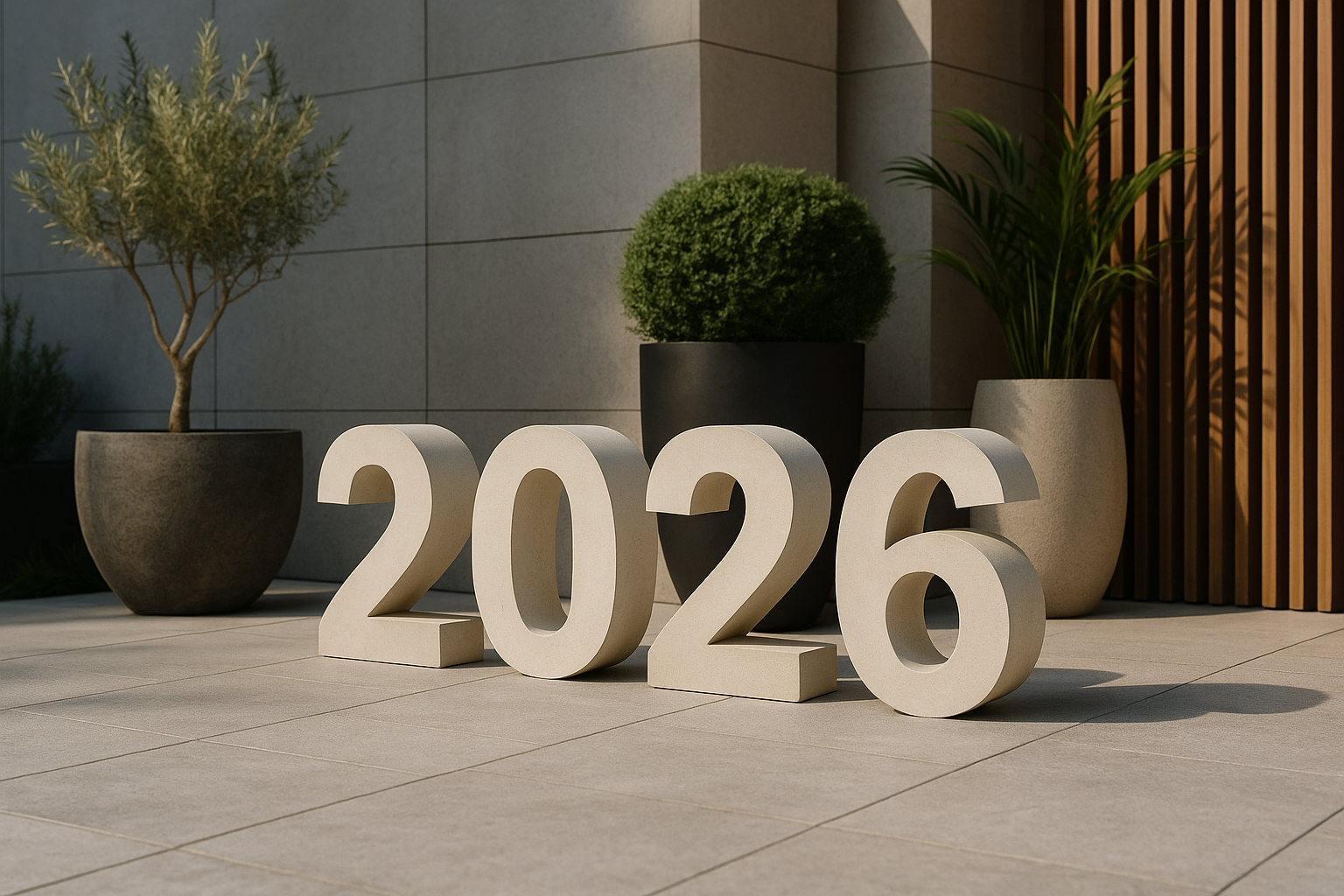
2026 Design Trends - What you need to know
The built environment is evolving faster than at any point in the last decade. Shifts in climate, urban density, material technology, labor constraints, and human behavioral patterns are reshaping how architects, designers, landscapers, and developers envision commercial spaces. As we look ahead to 2026, a clear set of design trends is emerging—trends defined by a move toward minimalism, sensory experience, sustainable material innovation, and fluid indoor–outdoor integration.
The year ahead will not be defined by loud, experimental gestures, but by refinement, restraint, and architectural clarity. Designers are leaning into materials and forms that feel grounded yet expressive, durable yet sculptural. Outdoor environments—once treated as secondary—are becoming central to the design identity of hotels, multi-family buildings, restaurants, and public spaces. Planters, decking, façades, lighting, and structural elements are being used to create environments that feel both calming and intentional.
This article explores the major architectural and outdoor design trends that will shape 2026, with specific insight into materials, finishes, spatial strategies, and color palettes rising in prominence.
1. Raw Minimalism: The New Architectural Aesthetic
Minimalism in 2026 is shifting away from the cold, stark white environments of the past decade. Instead, designers are embracing raw, tactile minimalism—spaces that are clean but layered with texture and grounded in natural materials.
1.1 Soft Earth Tones and Matte Finishes
The 2026 palette is dominated by:
Sand
Clay
Bone
Charcoal
Burnt umber
Olive green
Soft taupe
These tones complement both urban architecture and natural landscapes.
Matte finishes, particularly matte fiberglass and matte aluminum, offer a quiet, sculptural presence without glare or reflectiveness.
1.2 Sculptural Simplicity
Rectangular and cylindrical forms remain foundational, but designers are leaning toward:
Gentle tapers
Softly rounded edges
Pure geometric volumes
The goal is clarity rather than ornamentation. This makes planters and outdoor structures feel like part of the architecture rather than decorative additions.
1.3 Brutalist Influence, Softened
Elements of Brutalism—strong silhouettes, monolithic forms—are returning, but softened through:
Lighter colors
Natural textures
Integrated greenery
Curved edges rather than sharp corners
This balance brings power and warmth to commercial spaces.
2. Oversized Sculptural Planters as Architectural Anchors
One of the most visible trends for 2026 is the use of oversized planters as architectural features, not accessories. Designers are moving beyond simple rectangles and cylinders into forms that anchor space and elevate the visual identity of a property.
2.1 Scale as a Design Language
Large planters—48”, 60”, even 72” and above—serve multiple purposes:
Add bold architectural presence
Create visual weight that balances open space
Act as focal points in lobbies, courtyards, rooftops, and entrances
Define zones without walls
Oversized fiberglass is especially advantageous because it achieves scale without overwhelming structural load capacities.
2.2 Matte Black, Sand, and Stone-Look Finishes
Three finishes dominate in 2026:
Architectural Black (matte) → dramatic, modern, sculptural
Sand and Clay → calm, neutral, biophilic
Stone Textures → granite, terrazzo-inspired, limestone-inspired
These finishes blur the line between synthetic composites and natural stone, giving planters a more architectural identity.
2.3 Blending Art and Landscaping
Planters are increasingly designed as sculptural objects—monuments that hold greenery rather than simple containers. Designers are experimenting with:
Bowl-shaped forms
Ultra-tall narrow cylinders
Wide rectangular troughs with extreme length
Soft, pebble-like organic shapes
This trend mirrors the broader integration of art into outdoor environments.
3. Hybrid Indoor–Outdoor Spaces: The New Standard in Commercial Design
One of the most enduring post-2020 design shifts is the blurring of interior and exterior boundaries. In 2026, this becomes a defining architectural priority.
3.1 Material Continuity Across Thresholds
Designers are using the same or complementary materials both inside and outside to create uninterrupted spatial flow:
Matching flooring tones
Consistent planter finishes
Similar lighting color temperatures
Continuous wood or stone elements
This approach makes spaces feel larger, more connected, and more luxurious.
3.2 Hospitality Influence on All Sectors
Hotels popularized hybrid thresholds, but now the trend has expanded to:
Multi-family lobbies → extending into courtyards
Restaurants → blending indoor dining with terraces
Offices → opening to landscaped outdoor lounges
Retail → creating experiential outdoor zones
Planters play a crucial role in defining these transitions subtly and elegantly.
3.3 Weather-Resistant Lightweight Materials
As outdoor utilization increases, designers are turning to materials that offer:
Low maintenance
UV stability
Resistance to freeze–thaw cycles
Lightweight installation
Fiberglass, aluminum, and advanced composites rise in demand for these reasons.
4. Durable Lightweight Materials Replacing Concrete
Concrete remains a popular architectural material, but its limitations—weight, labor complexity, sustainability concerns—are creating demand for alternatives.
4.1 Fiberglass as the Preferred Material for Large Installations
Fiberglass offers several advantages over concrete:
70–90% lighter weight
Greater design flexibility
Lower installation cost
No cracking in fluctuating climates
Long-term UV stability with gel coats
This makes it ideal for rooftops, balconies, and high-traffic outdoor environments.
4.2 Aluminum for Modern Minimalist Structures
Aluminum’s benefits align with 2026 design priorities:
Corrosion-resistant
Highly recyclable
Light but strong
Clean, architectural lines
It’s becoming increasingly popular for pergolas, screens, furniture, and planter accents.
4.3 Composite Woods and Recycled Material Innovations
Sustainability regulations and consumer expectations are driving the rise of:
Recycled resin composites
Wood–plastic hybrids
Post-industrial recycled fiberglass content
These materials balance aesthetics with environmental performance.
5. Monochrome Palettes: The Rise of Single-Tone Environments
A major aesthetic trend for 2026 is the use of monochrome color stories to create calm, immersive environments.
5.1 Black-on-Black for Urban Modernism
In hotels, restaurants, and luxury residences, all-black outdoor spaces communicate:
Sophistication
Modernity
Dramatic contrast with greenery
Matte black planters paired with black metal furniture are particularly striking.
5.2 Sand-on-Sand for Warm Minimalism
Designers are using variations of sand, beige, and clay to create:
Soothing hospitality experiences
Organic-feeling terraces
Biophilic common areas
Mediterranean-inspired courtyards
This palette reinforces the move toward natural materials.
5.3 Green-on-Green for Biophilic Immersion
Spaces designed around wellness and nature increasingly use layered greens—planters, walls, floors—to create a cohesive, soothing visual field.
6. Sustainable Manufacturing and Low-VOC Finishes
Sustainability is not a trend—it is an expectation. In 2026, designers are prioritizing materials and manufacturing methods that support environmental responsibility.
6.1 Recycled Resin Content in Fiberglass
More manufacturers are incorporating:
Recycled post-industrial resin
Recycled glass fibers
Bio-based resin additives
This reduces environmental impact without sacrificing durability.
6.2 Low-VOC Coatings and Gel Coats
VOC restrictions are tightening across major markets. Low-VOC gel coats are becoming standard for:
Indoor applications
Enclosed rooftop lounges
Hospitality projects with sustainability certifications
6.3 Longevity as Sustainability
One of the most overlooked sustainable practices is choosing materials that last. Fiberglass’s 10–20+ year lifespan significantly reduces replacement cycles and waste.
7. Biophilic Vertical Design
Verticality is a key theme for 2026, driven by urban density and the desire for nature in compact environments.
7.1 Green Walls and Integrated Planter Screens
Designers are increasingly specifying:
Modular planter screens
Vertical planter walls
Tiered planter structures
Hybrid partition-planter systems
These create privacy and beauty simultaneously.
7.2 Multi-Level Planter Groupings
Instead of uniform heights, designers are using layers:
Tall cylinders
Medium tapers
Low bowls
Rectangular troughs
The effect mimics natural growth patterns.
7.3 Shading + Plant Integration
Pergolas and shade structures are being built with:
Integrated planter bases
Climbing plants
Trellis systems
This adds cooling, beauty, and texture to outdoor environments.
8. Final Thoughts
The design landscape of 2026 is defined by a shift toward architectural clarity, material intelligence, and natural integration. Minimalist forms are becoming more textured and grounded. Oversized planters and sculptural elements are stepping into the spotlight. Indoor–outdoor continuity is becoming essential. And sustainable, lightweight materials—especially fiberglass—are at the forefront of these movements.
As architects and designers navigate these trends, the most successful spaces will be those that merge aesthetic restraint with functional innovation. The environments that feel calm, intentional, and connected to nature are the ones that will resonate most deeply with users.
2026 will be a year marked not by excess, but by meaningful refinement—and the materials, forms, and outdoor elements we choose will shape the experiences of the built world for years to come.
